Third graders were eager to celebrate the 100th Day of School this year! The time has flown by! In the morning, we had many tasks to carry out and investigate. As a class, we made 100 equations that equaled 100. We tried to use as many different numbers and operations as we could to make interesting math sentences. In another math challenge, we had to figure out which equations equaled one hundred exactly to figure out a secret puzzle. We also timed how long it took to count to 100, found out where we would end up when we measured one hundred feet from the classroom, and wrote 100th Day poetry about ourselves. Earlier in the month, students used their imagination to think about what our lives would be like in 100 years and wrote biographies about our future lives. It was exciting and also funny to think about how the world might change and the things we would invent or experience. Many students thought of ways to make a difference in the world, dreamed about their exciting jobs, and also thought about futuristic hobbies and activities they would get to do. We had a blast celebrating The 100th Day of School!
Friday, February 21, 2020
Celebrating the 100th Day Of School
Third graders were eager to celebrate the 100th Day of School this year! The time has flown by! In the morning, we had many tasks to carry out and investigate. As a class, we made 100 equations that equaled 100. We tried to use as many different numbers and operations as we could to make interesting math sentences. In another math challenge, we had to figure out which equations equaled one hundred exactly to figure out a secret puzzle. We also timed how long it took to count to 100, found out where we would end up when we measured one hundred feet from the classroom, and wrote 100th Day poetry about ourselves. Earlier in the month, students used their imagination to think about what our lives would be like in 100 years and wrote biographies about our future lives. It was exciting and also funny to think about how the world might change and the things we would invent or experience. Many students thought of ways to make a difference in the world, dreamed about their exciting jobs, and also thought about futuristic hobbies and activities they would get to do. We had a blast celebrating The 100th Day of School!

Supporting Growth Mindset in Kindergarten
Kindergarteners have been exploring the concept of growth mindset and how it helps us to move through new and sometimes hard tasks. We have begun reading some beautiful and powerful picture books, that were the catalysts for some very important conversations about working hard, making mistakes, and perseverance. We have explored how the brain needs to grow and stretch and that is what is happening when we are learning.
 |
| A few of our growth mindset read aloud books |
During beginning conversations, the children tried to envision when they were very little and laughed about how messy they probably were when they were first learning how to eat, but over time they did learn. We reminded them that talking and walking were also hard for all of us at one time too, yet with time and practice, all of us learned those skills- we just do not remember how hard it was and how long it took! After these read-alouds and class discussions, some new favorite classroom quotes are "mistakes make thinking happen" and "try and try again!"
Some other phrases that we have been using to create positive self talk as we explore growth mindset:
- I can try.
- I can try again.
- I can try a new way.
- I can ask for help.
- I can take a break and then try again.
- Everything new is hard before it becomes easy.
- Work until you are proud.
- I can not do it yet!
- Believe in the power of yet.
Below are some quotes that kindergarten students shared about experiences that a growth mindset has been supporting:
"Sometimes it is hard to stand up for my self but I am trying. Sometimes I need help from my teacher."
 |
| Kindergarten after play performance photo |
"We wrote our play and then we had to change it. It was too long. Then we tried again and again. I think we got it just right. A lot of people clapped for us."
 |
| Kid writing |
"Kid writing is not as hard any more but it used to be because it was new to me and my hand would sometimes hurt. Now my hand muscles are stronger because I practice!"
"I was working on lower case n. I can do them now because I practiced and practiced!"
"I didn't know about sight words and they are really hard. Jolly Jump Up and Sight Word Memory help me learn new words."

"Writing big numbers is hard yet I am practicing. I can not do it yet...but I will do it soon."
"I love math but sometimes it is hard for me. It is hard to write the numbers the right way. I go fast and I am learning to slow down."
"Math is something I am practicing and it gets easier every time I do it!"
 |
| Creating a Pokemon scene with cutting and drawing skills |
"Cutting with scissors is easy now because I kept trying to cut new things like straight lines, curves and zig zags. It took me a long time to learn but I did it!"
 |
| Book sharing with the class |
"At the beginning of the year, it was soooo hard to sit and listen to book sharing. Now I can sit longer and I like seeing my friend's books. I think a lot of practice helped.""
"Book sharing was hard at first because I was nervous because I had to sit on the sofa and talk. There were a lot of kids watching me. But every week I feel better and better. Now I can read some of the words in my books too. That makes me happy."
 |
| Kindergarten loves "big" puzzles for the challenge! |
"I didn't know how to do big puzzles. I watched other friends and then tried it. We matched colors and shapes. We figured out it is easier to start with the outside straight pieces first and then fill in the middle pieces."
"We worked on a 400 hundred piece puzzle. It was really hard but we kept trying. We were so excited when we had one piece left and then it was done. Now we are doing a 500 hundred piece puzzle!"
"Really big puzzles are really hard but if we work together, we can do it."
Growing and building on growth mindset in kindergarten helps the students to have a deeper understanding of how the brain works and encourages positive self talk and the essential social/emotional and academic skills of resiliency, perseverance, flexibility, dedication, and risk taking.
This Week in PE / Health / Wellness
This week in Physical Education, kindergarten through second grade focused in on their throwing techniques. We did this through a variety of skills games and circuits. In third and fourth grade, we started working on strategy and skills for our next unit of Handball, as well as some cooperative games.
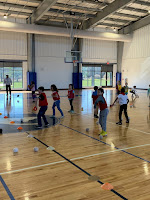

This week in Health, kindergarten focused in on families and what relationships might be part of a family. First and second grade focused in on the heart and why cardiovascular activity is important to your overall health. Meanwhile in third and fourth grades, we continued working on nutrition and what different types of foods are, as well as why they are important.

Setting the Scene

 Third graders just finished sharing their favorite scenes in books by creating dioramas. The students were invited to share whatever scene they most enjoyed in a book of their choosing, or a scene they thought would be fun to recreate. Students were each given a shoebox and some construction paper. Keeping the project simple with minimal materials allowed the students to let their own imaginations drive the project. How to incorporate their characters into the scene gave the students a chance to work on their problem solving skills.

 As students worked we discussed who was in the scene, why the scene was important to them and what they needed to create the scene. We will be circling back to this as we focus more on setting in the books we read in the library. This project frames what we mean by setting as well as considering what is necessary to share this important part of the story with the reader.
 An additional conversation that came from this activity is how we all perceive the world a little differently. Some students chose the same book, while others chose the same series. All of the settings reflect the way the student understood the story, so all a little different. This built on the work the students did in second grade when we read the story, "They All Saw a Cat" and then created their own images. These are conversations we will continue to touch on.
Black Lives Matter: Third Grade Reads Books by Black Authors


 Crown: An Ode to the Fresh Cut by Derrick Barnes and illustrated by Gordon C. James was read aloud by Ann BB to each of the third grade classes. This picture book published in 2017 has won many awards both for the writing and the illustrations. Some of the awards include the Newbery Award, Caldecott Award, Coretta Scott King Award and the Ezra Jack Keats Award. Ann shared Derrick Barnes's journey to becoming a children's book author. He began his career after graduating from college with a degree in marketing as the first African American male staff writer hired to write for Hallmark Cards. From there he started writing and publishing children's books.
While reading aloud this book, students had the opportunity to share their thinking with a partner and engage in class discussion. They reflected on the big idea in the story and on Derrick Barnes' words in A Note From the Author in the back of the book. Derrick wrote: "Crown: An Ode to the Fresh Cut" focuses on the humanity of black boys/sons/brothers/nephews/grandsons, and how they see themselves when they highly approve of their refections in the mirror. Deep down inside, they wish that everyone could see what they see: a real life, breathing, compassionate, thoughtful, brilliant, limitless soul that matters-that desperately matters. We've always mattered." Students were also given the opportunity to write about the book in their journal.


 Nikki Grimes and Derrick Barnes have both written fiction chapter books featuring Black main characters. Jeanne's class read Dyamonde Daniel: Make Way for Dyamonde Daniel by Nikki Grimes in December and Felix's class is presently reading this book. Students explore issues surrounding friendship, family and identity in this book and how friendships can develop even when it doesn't first appear possible. Jeanne's class is reading Ruby Booker and the Booker Boys by Derrick Barnes. Students explore similar issues in this book as well. Both books include fully developed characters, compelling problems and solutions that students can apply to similar situations in their own lives.
Songs, Games and Plays of Bessie Jones-Black Lives Matter at School Week
During Black Lives Matter at School Week, students learned about the rich tradition of African-American songs, games and plays found in the book "Step it Down" by Bessie Jones and Bess Lomax Hawes (1972).
Bessie Jones (1902-1984) was a member of the Georgia Sea Island Singers as well as a culture bearer and preserver of African-American songs, games, plays and more for children which she learned from her own grandparents who were enslaved and also lived to see their freedom. . When Bessie Jones learned these treasures from her grandparents who had learned them from their ancestors, they were already over 100 years old. In fact, her grandparents lived to be 100 and 105! Bessie Jones spent many years teaching these songs, gmaes and plays to children around the country, also appearing on Pete Seeger's "Ranbow Quest" where she demonstrated her teachings with the children of the Downtown Community School in New Yaork (1965). Now we get to inehrit these incredible treasures that are not only part of the American musical tradition, but American music edcuation traditions as well. These are two videos of the "play" "Thread Needle". The difference between a play and a game is that plays talk about and dramatize the stories of everyday life. They were often used to tell the sotries of how Black people were treated becuase it was not safe for Black folks to speak freely about their mistreatment. But these plays also talked about simple every day events and communal living. This particular play talkes about sewing and the communual act of borrowing something from your neighbor without having to "pay it back". Where Ms. Jones grew up, it was common to have quiting bees, and perform other types of work and chores in community. Out of these experiences came the stories for their plays. Games, on the other hand, usually have a comptetitive element to them and there is a winner and a loser.
In this play, we see students "threading" in and out of the circle. Then, they "wind up this bumkum" which is winding the thread around the bobbin, signifying the "end of the borrowing" from ones neighbor. Finally, they unwind the bumkum, signaling the end of the play.
These students did a fabulous job learning this fun and challenging play in one class period!
Enjoy!
"Nana, Thread Needle" Part 1
"Nana, Thread Needle" Part 2
Bessie Jones (1902-1984) was a member of the Georgia Sea Island Singers as well as a culture bearer and preserver of African-American songs, games, plays and more for children which she learned from her own grandparents who were enslaved and also lived to see their freedom. . When Bessie Jones learned these treasures from her grandparents who had learned them from their ancestors, they were already over 100 years old. In fact, her grandparents lived to be 100 and 105! Bessie Jones spent many years teaching these songs, gmaes and plays to children around the country, also appearing on Pete Seeger's "Ranbow Quest" where she demonstrated her teachings with the children of the Downtown Community School in New Yaork (1965). Now we get to inehrit these incredible treasures that are not only part of the American musical tradition, but American music edcuation traditions as well. These are two videos of the "play" "Thread Needle". The difference between a play and a game is that plays talk about and dramatize the stories of everyday life. They were often used to tell the sotries of how Black people were treated becuase it was not safe for Black folks to speak freely about their mistreatment. But these plays also talked about simple every day events and communal living. This particular play talkes about sewing and the communual act of borrowing something from your neighbor without having to "pay it back". Where Ms. Jones grew up, it was common to have quiting bees, and perform other types of work and chores in community. Out of these experiences came the stories for their plays. Games, on the other hand, usually have a comptetitive element to them and there is a winner and a loser.
In this play, we see students "threading" in and out of the circle. Then, they "wind up this bumkum" which is winding the thread around the bobbin, signifying the "end of the borrowing" from ones neighbor. Finally, they unwind the bumkum, signaling the end of the play.
These students did a fabulous job learning this fun and challenging play in one class period!
Enjoy!
"Nana, Thread Needle" Part 1
"Nana, Thread Needle" Part 2
Friday, February 7, 2020
3rd Grade Bridge Challenge
Last week third grade began a unit about engineering in science class. After a visit from Habitat for Humanity, we began discussing what engineering is. We arrived at the conclusion that engineers create things to help fix problems. After discussing a few current events from which problems have arisen, the students thought of some ways engineers could create things to help with the problems. They went a step farther and used their imagination to derive imaginary inventions to help with more common problems such as making their beds, rolling sushi during sushi shortages, and helping to extinguish wild fires.
After drawing and presenting their inventions with one another, we began learning about bridges. We discussed terms such as load bearing and structural soundness. After the students practiced creating virtual bridges and testing to make sure they were load bearing and sound on the computers they began a bridge building challenge. Each group had one class period to create a bridge from straws and tape. We had fun testing the bridges to find out how much load each bridge could hold.


Subscribe to:
Posts (Atom)